1. Introduction to Artificial Intelligence in Education
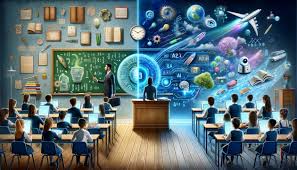
How Artificial Intelligence (AI) is Transforming Education at Every Level (2026 & Beyond)
Introduction
Artificial Intelligence (AI) has become one of the most revolutionary technologies of the 21st century. It is transforming nearly every industry, including healthcare, banking, manufacturing, agriculture, transportation, entertainment, and most importantly, education. AI is no longer just a futuristic concept—it is already helping millions of students, teachers, schools, colleges, and universities around the world.
Education is the foundation of every successful society. As technology evolves, traditional teaching methods are being enhanced by intelligent systems capable of personalizing learning experiences, automating administrative tasks, improving student engagement, and making quality education more accessible to everyone.
In 2026, AI has become an essential part of modern education. Students use AI-powered tutors to solve doubts instantly, teachers use AI to prepare lesson plans and assessments, schools rely on AI for attendance and performance tracking, and universities employ AI to support research and academic innovation. AI also enables students with disabilities to access learning resources more easily through speech recognition, text-to-speech, translation, and assistive technologies.
The future of education lies in the collaboration between human teachers and intelligent AI systems. Rather than replacing teachers, AI acts as a powerful assistant that enhances teaching effectiveness and helps learners achieve their full potential.
What is Artificial Intelligence (AI)?
Artificial Intelligence refers to the ability of computer systems to perform tasks that normally require human intelligence. These tasks include:
- Learning from data
- Understanding natural language
- Solving problems
- Making decisions
- Recognizing images and speech
- Translating languages
- Predicting outcomes
- Generating text, images, audio, and videos
AI systems continuously improve by learning from data and user interactions, making them increasingly useful in educational environments.
Simple Definition
Artificial Intelligence is the science of creating smart computer systems that can think, learn, reason, and assist humans in solving problems.
Why AI is Important in Education
Modern classrooms face several challenges:
- Large student populations
- Different learning speeds
- Limited teacher time
- Administrative workload
- Lack of personalized education
- Difficulty tracking student progress
AI helps solve these challenges by providing intelligent educational support.
Major Reasons AI is Important
- Personalized learning experiences
- Instant doubt solving
- Smart assessments
- Automated grading
- Improved student engagement
- Better accessibility
- Reduced teacher workload
- Data-driven decision making
- Flexible online learning
- Continuous learning support
Brief History of AI in Education
1950s – The Beginning
British mathematician Alan Turing introduced the idea that machines could simulate intelligent behavior. His work laid the foundation for modern AI.
1960s
Researchers began developing computer-assisted learning systems that could provide simple educational exercises.
1970s
Intelligent Tutoring Systems (ITS) were introduced to help students practice mathematics and science.
1980s
Expert systems became popular in universities for specialized learning and decision support.
1990s
The growth of the internet enabled online education, digital libraries, and computer-based training.
2000s
Learning Management Systems (LMS) became common in schools and universities, allowing online course delivery and progress tracking.
2010s
Machine learning and deep learning revolutionized educational technology. Adaptive learning platforms, virtual classrooms, and AI-powered recommendation systems became more advanced.
2020–2026
The widespread adoption of generative AI has transformed education by enabling:
- AI tutors
- Intelligent chatbots
- Automated content creation
- Personalized lesson plans
- AI-assisted research
- Interactive learning experiences
How AI Works in Education
AI in education generally follows these steps:
- Collects learning data from students.
- Analyzes performance and learning patterns.
- Identifies strengths and weaknesses.
- Recommends personalized study materials.
- Provides instant feedback.
- Tracks progress over time.
- Helps teachers improve instruction based on analytics.
This continuous feedback loop creates a more effective and individualized learning experience.
AI in Preschool Education (Ages 3–5)
AI introduces young children to learning through interactive and engaging activities.
Applications
- Interactive educational games
- AI-powered storytelling
- Speech recognition for pronunciation practice
- Smart toys that respond to voice commands
- Personalized alphabet and number learning
- Visual recognition activities
- Music and rhyme generation
- Early language development
Benefits
- Improves attention span
- Encourages curiosity
- Develops communication skills
- Makes learning enjoyable
- Supports early cognitive development
AI in Primary School (Classes 1–5)
At the primary level, AI makes learning fun and interactive while building foundational skills.
Personalized Learning
AI analyzes each student’s progress and recommends lessons suited to their pace.
Example:
- A student struggling with multiplication receives additional practice questions and explanatory videos.
- A student excelling in reading is offered more challenging texts and comprehension exercises.
Interactive Learning
AI-powered applications use:
- Animations
- Voice interaction
- Educational games
- Quizzes
- Story-based lessons
These methods increase engagement and retention.
Homework Assistance
AI can:
- Explain difficult concepts
- Provide step-by-step solutions
- Suggest practice questions
- Offer hints instead of direct answers, encouraging independent thinking
Reading Improvement
AI tools help children by:
- Listening to reading aloud
- Correcting pronunciation
- Tracking fluency
- Suggesting age-appropriate books
Mathematics Learning
AI assists students in:
- Basic arithmetic
- Word problems
- Geometry basics
- Mental math exercises
- Personalized revision
AI in Middle School (Classes 6–8)
Middle school students encounter more complex subjects, and AI supports deeper understanding.
Science Education
AI simulations allow students to:
- Explore the solar system
- Conduct virtual experiments
- Understand ecosystems
- Visualize chemical reactions
- Study human anatomy interactively
Language Learning
AI-powered language tools help students:
- Improve grammar
- Expand vocabulary
- Practice speaking and listening
- Receive pronunciation feedback
- Translate content for better understanding
Coding Education
AI introduces programming through:
- Interactive coding exercises
- Error detection
- Personalized hints
- Project recommendations
Creative Learning
Students can use AI to:
- Write stories
- Create presentations
- Design posters
- Compose music
- Generate educational illustrations
AI in High School (Classes 9–12)
High school education focuses on academic excellence and career preparation. AI provides advanced support in these areas.
Exam Preparation
AI can:
- Generate mock tests
- Identify weak topics
- Create personalized study schedules
- Recommend revision materials
- Predict readiness for examinations
Career Guidance
AI analyzes:
- Student interests
- Academic performance
- Skills
- Career trends
It then suggests suitable career paths such as engineering, medicine, commerce, arts, data science, cybersecurity, or artificial intelligence.
Project Assistance
AI helps students:
- Brainstorm project ideas
- Organize research
- Improve writing
- Create diagrams
- Summarize complex information
- Prepare presentations
Students should use AI as a learning assistant and verify information independently to strengthen critical thinking.
Key Benefits of AI in School Education
| Traditional Learning | AI-Enhanced Learning |
| Same lessons for everyone | Personalized learning paths |
| Manual grading | Automated assessments |
| Fixed classroom schedule | Anytime, anywhere learning |
| Limited feedback | Instant feedback |
| Standard textbooks | Interactive digital resources |
| Teacher-centered instruction | Student-centered learning |
| Slow performance analysis | Real-time analytics |
| Limited accessibility | Inclusive learning tools |
Advantages of AI for Students
- Learn at their own pace
- Receive instant answers to questions
- Access 24/7 learning support
- Improve exam preparation
- Increase confidence through personalized feedback
- Develop digital literacy and AI skills
- Enhance creativity with AI-assisted projects
- Access high-quality educational resources regardless of location
AI in College and University Education
Higher education has experienced one of the biggest transformations due to Artificial Intelligence. Colleges and universities are using AI to improve teaching methods, research, student support, admissions, and campus management. AI enables institutions to provide a more personalized and efficient learning experience while helping students prepare for careers in an AI-driven world.
Personalized Learning for University Students
Every student learns differently. AI-powered learning platforms analyze:
- Learning speed
- Assignment performance
- Quiz results
- Attendance records
- Areas of interest
- Career goals
Based on this analysis, AI recommends:
- Customized study plans
- Additional practice exercises
- Relevant online courses
- Research papers
- Video lectures
- Interactive simulations
This ensures that students receive education tailored to their individual needs rather than following a one-size-fits-all approach.
AI-Powered Academic Advising
Choosing the right courses and career path can be challenging for university students.
AI-based academic advisors help students by:
- Recommending subjects based on interests
- Suggesting elective courses
- Monitoring academic progress
- Identifying students at risk of failing
- Providing graduation planning
- Recommending internships
- Suggesting certification courses
This helps students make informed decisions throughout their educational journey.
AI in Admissions Process
Universities receive thousands of applications every year.
AI simplifies admissions by:
- Screening applications
- Verifying documents
- Detecting duplicate applications
- Matching applicants with eligibility criteria
- Scheduling interviews
- Answering admission-related questions using chatbots
Benefits include:
- Faster admissions
- Reduced paperwork
- Improved transparency
- Better applicant experience
AI in Professional Courses
Professional education is increasingly integrating AI to provide practical, industry-relevant skills.
Engineering
AI supports engineering students through:
- CAD design assistance
- Circuit simulations
- Robotics programming
- Structural analysis
- Predictive maintenance projects
- Smart manufacturing simulations
Medical Education
Medical students use AI for:
- Virtual patient simulations
- Anatomy visualization
- Medical image analysis
- Disease diagnosis practice
- Drug discovery research
- Clinical decision support
Business and Management
MBA and commerce students use AI for:
- Market research
- Financial forecasting
- Customer analytics
- Business intelligence
- Supply chain optimization
- Data-driven decision-making
Law Education
AI assists law students by:
- Searching legal databases
- Summarizing case laws
- Contract analysis
- Legal research
- Document drafting
- Compliance analysis
AI for Teachers
Artificial Intelligence is not replacing teachers. Instead, it serves as a powerful assistant that allows educators to focus more on teaching and mentoring while reducing administrative tasks.
Lesson Planning
AI helps teachers create:
- Daily lesson plans
- Weekly teaching schedules
- Interactive classroom activities
- Homework assignments
- Classroom presentations
- Practice worksheets
Teachers can customize AI-generated content to suit their students’ needs.
Automatic Question Paper Generation
Preparing examinations manually can take hours.
AI can automatically generate:
- Multiple-choice questions (MCQs)
- Fill-in-the-blanks
- True or False questions
- Short-answer questions
- Long-answer questions
- Practical assignments
It can also generate question papers based on:
- Difficulty level
- Learning objectives
- Subject syllabus
- Bloom’s Taxonomy
Automated Grading
AI reduces the burden of evaluating assignments.
It can assess:
- Objective-type questions
- Coding assignments
- Programming projects
- Mathematics exercises
- Grammar-based language tests
- Online quizzes
Teachers save significant time and can provide quicker feedback to students.
Performance Analytics
AI generates detailed reports showing:
- Student strengths
- Weak subjects
- Attendance patterns
- Learning progress
- Assignment completion rates
- Examination performance
These reports help teachers identify students who need additional support.
AI-Powered Smart Classrooms
Modern classrooms are becoming more interactive through AI technologies.
Features of Smart Classrooms
- Interactive smart boards
- AI voice assistants
- Digital attendance
- Real-time translation
- Automated lecture recording
- Personalized content recommendations
- Intelligent classroom management
Students become more engaged through visual and interactive learning experiences.
AI-Based Virtual Tutors
Virtual tutors are available 24 hours a day.
They help students by:
- Explaining difficult concepts
- Solving doubts instantly
- Providing additional practice
- Offering personalized recommendations
- Tracking learning progress
- Motivating students with achievements
Unlike traditional tutoring, AI tutors are always available.
AI Chatbots for Student Support
Educational institutions use AI chatbots to answer common student questions.
Examples include:
- Admission inquiries
- Fee details
- Examination schedules
- Timetable information
- Scholarship information
- Library services
- Campus navigation
Benefits include:
- Instant responses
- Reduced workload for administrative staff
- Improved student satisfaction
AI in Online Learning
Online education has grown rapidly, and AI has made digital learning more effective.
Intelligent Learning Platforms
AI-powered platforms can:
- Recommend personalized courses
- Suggest revision topics
- Monitor learning behavior
- Adapt content difficulty
- Track learning milestones
Students can learn at their own pace while receiving continuous guidance.
Adaptive Learning
Adaptive learning systems continuously adjust lessons based on student performance.
For example:
If a student struggles with Algebra, AI automatically recommends:
- Easier explanations
- Additional practice
- Video tutorials
- Interactive exercises
- Extra quizzes
If a student performs well, AI introduces more advanced topics.
AI in Virtual Laboratories
Not every school or college has expensive laboratory equipment.
AI-powered virtual labs allow students to:
- Perform chemistry experiments safely
- Explore physics simulations
- Conduct biology experiments
- Practice engineering concepts
- Learn electronics
- Study environmental science
Benefits include:
- Safe experimentation
- Lower costs
- Unlimited practice
- Better understanding through simulations
AI in Educational Research
Researchers use AI to process vast amounts of information quickly.
AI assists in:
- Literature review
- Data analysis
- Pattern recognition
- Statistical modeling
- Citation management
- Research summarization
Researchers can focus more on innovation rather than repetitive tasks.
AI for Writing and Academic Support
Students often need help organizing ideas and improving academic writing.
AI can assist by:
- Correcting grammar and spelling
- Improving sentence structure
- Suggesting better vocabulary
- Creating outlines
- Summarizing research papers
- Checking readability
Students should use AI responsibly to enhance learning while producing original work.
AI in Coding Education
Programming has become one of the most important career skills.
AI coding assistants help students by:
- Explaining programming concepts
- Detecting coding errors
- Suggesting improvements
- Debugging programs
- Recommending best practices
- Generating sample code for learning
Programming becomes easier for beginners while helping advanced students work more efficiently.
AI in Language Learning
Learning multiple languages has become easier with AI.
Features include:
- Real-time translation
- Pronunciation correction
- Speaking practice
- Grammar checking
- Vocabulary building
- Conversation simulations
Students gain confidence through interactive language practice.
AI in Skill Development
Beyond academic subjects, AI helps learners develop practical and career-ready skills.
Communication Skills
AI evaluates:
- Speaking confidence
- Pronunciation
- Grammar
- Vocabulary
- Public speaking
Problem-Solving Skills
AI presents:
- Interactive puzzles
- Logical reasoning challenges
- Case studies
- Real-world scenarios
- Decision-making exercises
Critical Thinking
AI encourages learners to:
- Compare multiple solutions
- Evaluate evidence
- Analyze information
- Identify biases
- Make informed decisions
Creativity
AI supports creativity by helping students:
- Design graphics
- Create presentations
- Write stories
- Compose music
- Generate educational videos
- Brainstorm innovative ideas
Benefits of AI in Higher Education
| Traditional Education | AI-Powered Education |
| Fixed curriculum | Personalized learning paths |
| Limited office hours | 24/7 AI assistance |
| Manual grading | Automated assessment |
| Paper-based administration | Digital workflows |
| Limited career guidance | AI-driven career recommendations |
| Physical laboratories only | Virtual AI laboratories |
| General feedback | Individual performance analytics |
Challenges of AI in Higher Education
Despite its many advantages, AI also presents challenges:
- Data privacy concerns
- Dependence on technology
- Digital divide in underserved areas
- Risk of academic dishonesty
- High implementation costs
- Need for teacher training
- Algorithmic bias
- Ensuring ethical use of AI
Educational institutions must establish clear policies to promote responsible and secure AI adoption.
Best Practices for Responsible AI Use
Students and educators should:
- Verify AI-generated information with reliable sources.
- Use AI to support learning, not replace independent thinking.
- Cite AI assistance where required by institutional policies.
- Protect personal and academic data.
- Follow ethical guidelines for assignments and research.
- Balance AI use with critical thinking and collaboration.
AI in Examinations and Assessment
Examinations are one of the most important components of education. Traditionally, preparing question papers, evaluating answer sheets, analyzing results, and providing feedback require significant time and effort. Artificial Intelligence is transforming this process by making assessments faster, more accurate, and more personalized.
AI-Based Online Examinations
AI-powered examination systems provide secure and efficient online testing environments.
Features
- Automatic question selection
- Randomized question papers
- Adaptive difficulty levels
- Instant result generation
- Time management
- Performance analytics
- Secure login verification
- Cloud-based examination systems
Benefits
- Reduces paper usage
- Faster examination process
- Fair assessment
- Immediate feedback
- Lower administrative costs
Adaptive Testing
Traditional examinations present the same questions to every student.
AI-powered adaptive testing adjusts question difficulty according to student performance.
Example
If a student answers correctly:
- The next question becomes more challenging.
If a student answers incorrectly:
- AI provides easier questions or additional hints.
This creates a more accurate evaluation of student knowledge.
AI-Based Question Paper Generation
Teachers spend many hours preparing examination papers.
AI can automatically create:
- Multiple Choice Questions (MCQs)
- Fill-in-the-Blanks
- True/False Questions
- Short Answer Questions
- Long Answer Questions
- Case Study Questions
- Numerical Problems
Question papers can be generated based on:
- Subject
- Grade level
- Learning objectives
- Difficulty level
- Marks distribution
- Previous examination patterns
Automatic Answer Evaluation
AI evaluates:
- Objective questions
- Coding assignments
- Mathematics problems
- Grammar exercises
- Language tests
- Digital worksheets
For subjective answers, AI assists teachers by highlighting key concepts and organizing responses, while final evaluation remains under teacher supervision.
Instant Feedback
Instead of waiting several days for results, students receive immediate feedback.
AI explains:
- Correct answers
- Incorrect answers
- Areas needing improvement
- Suggested study materials
- Personalized revision plans
This encourages continuous learning rather than learning only for exams.
AI for Homework and Assignments
Homework reinforces classroom learning. AI helps students complete assignments more effectively while promoting understanding.
Homework Assistance
AI can:
- Explain difficult concepts
- Suggest learning resources
- Solve step-by-step examples
- Recommend practice questions
- Generate quizzes for revision
- Provide hints instead of direct answers
Students should use AI to understand concepts rather than simply copying answers.
Assignment Improvement
AI helps students improve academic work by:
- Correcting grammar
- Improving sentence structure
- Suggesting stronger vocabulary
- Checking readability
- Organizing ideas logically
- Detecting repeated content
Project Guidance
AI supports school and college projects through:
- Topic suggestions
- Research guidance
- Data organization
- Presentation design
- Report formatting
- Citation assistance
Students still need to verify information and contribute original ideas.
AI in School Administration
Educational institutions handle large amounts of administrative work. AI automates repetitive tasks, allowing staff to focus on improving education.
Student Admissions
AI assists with:
- Online applications
- Document verification
- Eligibility checking
- Interview scheduling
- Admission status updates
Attendance Management
Modern attendance systems use:
- Facial recognition
- QR codes
- RFID cards
- Mobile applications
- Biometric systems
Benefits include:
- Accurate attendance
- Reduced manual errors
- Time savings
- Better record management
Timetable Generation
Creating school timetables manually is complex.
AI considers:
- Teacher availability
- Classroom capacity
- Subject requirements
- Student schedules
- Laboratory sessions
The system generates optimized timetables automatically.
Fee Management
AI simplifies financial operations by:
- Sending payment reminders
- Tracking pending fees
- Generating receipts
- Preparing financial reports
- Managing scholarships
Library Management
AI-powered libraries provide:
- Smart book recommendations
- Digital catalogs
- Automated book search
- Borrowing reminders
- Reading analytics
Students quickly find books relevant to their studies.
AI in Special Education
One of the greatest strengths of AI is making education more inclusive for learners with different abilities.
Students with Visual Impairments
AI supports learning through:
- Text-to-speech technology
- Voice navigation
- Screen readers
- Audio books
- Image descriptions
Students with Hearing Impairments
AI provides:
- Real-time captions
- Speech-to-text conversion
- Sign language assistance (where available)
- Visual learning tools
Students with Learning Disabilities
AI offers personalized support for learners with conditions such as dyslexia or attention-related learning challenges by:
- Simplifying reading materials
- Adjusting lesson pace
- Providing repeated practice
- Using interactive learning activities
- Offering individualized feedback
AI for Parents
Parents play a vital role in education.
AI helps parents monitor children’s learning through:
- Academic progress reports
- Attendance updates
- Homework notifications
- Performance analytics
- Personalized improvement suggestions
- Learning activity summaries
This strengthens communication between parents, teachers, and students.
AI in Career Guidance
Career planning has become more data-driven with AI.
Career Recommendation Systems
AI analyzes:
- Academic performance
- Skills
- Interests
- Personality assessments
- Industry trends
- Employment opportunities
It then suggests suitable career paths.
Career Areas Suggested by AI
Examples include:
- Artificial Intelligence
- Software Engineering
- Data Science
- Cybersecurity
- Cloud Computing
- Medicine
- Engineering
- Business Management
- Digital Marketing
- Graphic Design
- Education
- Law
These recommendations help students make informed decisions.
AI in STEM Education
STEM (Science, Technology, Engineering, and Mathematics) benefits significantly from AI.
Science
Students explore:
- Virtual laboratories
- Interactive experiments
- Scientific simulations
- Climate models
- Biological systems
Technology
AI introduces learners to:
- Programming
- Web development
- App development
- Machine Learning basics
- Robotics
- Internet of Things (IoT)
Engineering
AI supports:
- Design simulations
- CAD tools
- Robotics projects
- Automation concepts
- Industrial systems
Mathematics
AI provides:
- Step-by-step solutions
- Personalized practice
- Graph visualization
- Formula explanations
- Progress tracking
AI in Educational Content Creation
Teachers and institutions create large amounts of educational material. AI helps produce engaging content more efficiently.
Study Notes
AI can generate:
- Chapter summaries
- Revision notes
- Key concepts
- Flashcards
- Formula sheets
Presentations
AI assists in creating:
- Classroom presentations
- Infographics
- Charts
- Educational diagrams
- Interactive slides
Educational Videos
AI helps produce:
- Animated lessons
- Voice-over explanations
- Interactive tutorials
- Language translations
- Automatic subtitles
These resources improve understanding for diverse learners.
Quiz Creation
AI automatically creates quizzes with:
- Instant scoring
- Explanations
- Difficulty adjustments
- Topic-wise assessments
- Progress tracking
AI for Accessibility and Inclusive Learning
AI ensures that education reaches a wider audience by removing barriers.
Accessibility Features
- Voice assistants
- Speech recognition
- Real-time translation
- Text-to-speech
- Speech-to-text
- Adjustable fonts and display settings
- Personalized learning speeds
Inclusive AI helps students from different backgrounds and abilities participate more fully in education.
Real-World Examples of AI in Education
Example 1: Personalized Learning
A Grade 8 student struggles with algebra. The AI platform identifies this weakness and recommends extra videos, interactive exercises, and practice quizzes until the student demonstrates mastery.
Example 2: Teacher Productivity
A science teacher uses AI to generate a lesson plan, create a quiz, and prepare a presentation in less than an hour, allowing more time for classroom interaction.
Example 3: Parent Engagement
Parents receive weekly AI-generated reports showing attendance, homework completion, and areas where their child may need additional support.
Example 4: University Research
A postgraduate student uses AI to organize research papers, summarize literature, and analyze datasets, reducing time spent on repetitive tasks while focusing on original research.
Benefits of AI in Educational Management
| Traditional Management | AI-Powered Management |
| Manual attendance | Automated attendance systems |
| Paper-based records | Digital records |
| Manual timetables | AI-generated schedules |
| Slow communication | Instant notifications |
| Manual report generation | Automated analytics |
| Fixed learning support | Personalized recommendations |
Ethical Use of AI in Education
To ensure AI benefits everyone, educational institutions should:
- Protect student privacy and data.
- Be transparent about AI use.
- Keep teachers involved in important decisions.
- Encourage original thinking and academic integrity.
- Verify AI-generated information with reliable sources.
- Provide equal access to AI tools where possible.
Responsible use of AI builds trust and supports meaningful learning.
AI Tools for Students
Artificial Intelligence provides students with powerful tools that make learning more interactive, efficient, and personalized. These tools help students understand concepts, complete assignments, prepare for examinations, improve communication skills, and develop creativity.
AI Study Assistants
AI study assistants provide instant explanations and learning support.
Features
- Answer academic questions
- Explain complex concepts
- Generate study notes
- Summarize long chapters
- Create revision plans
- Recommend learning resources
Benefits
- 24/7 availability
- Personalized learning support
- Faster understanding
- Better exam preparation
AI Writing Assistants
Writing assistants help students improve academic writing.
They can assist with:
- Grammar correction
- Sentence improvement
- Vocabulary suggestions
- Essay organization
- Report formatting
- Citation guidance
Students should always review AI suggestions and ensure that submitted work reflects their own understanding and complies with academic integrity policies.
AI Mathematics Tools
AI-powered mathematics platforms provide:
- Step-by-step solutions
- Formula explanations
- Graph plotting
- Practice exercises
- Error identification
- Personalized revision
Students learn the reasoning behind answers instead of simply memorizing formulas.
AI Coding Assistants
Programming students benefit from AI through:
- Code explanations
- Error detection
- Debugging suggestions
- Programming tutorials
- Project ideas
- Best coding practices
These tools support beginners while helping experienced programmers improve efficiency.
AI Language Learning Tools
Language-learning platforms use AI to help students improve:
- Speaking
- Listening
- Reading
- Writing
- Grammar
- Pronunciation
- Vocabulary
Students receive instant corrections and personalized practice.
AI Tools for Teachers
Teachers also benefit significantly from AI-powered educational technology.
Lesson Planning
AI generates:
- Daily lesson plans
- Weekly schedules
- Classroom activities
- Teaching objectives
- Revision exercises
- Homework assignments
Presentation Creation
Teachers can quickly prepare:
- Interactive presentations
- Educational posters
- Charts
- Infographics
- Classroom illustrations
Assessment Tools
AI supports teachers by:
- Creating quizzes
- Generating examination papers
- Evaluating objective tests
- Tracking student progress
- Preparing performance reports
Classroom Analytics
AI dashboards help teachers understand:
- Student participation
- Attendance trends
- Learning speed
- Assignment completion
- Examination performance
- Individual learning needs
This enables early intervention for students who require additional support.
AI in Vocational Education
Vocational education focuses on practical skills that prepare learners for specific careers. AI enhances this training through simulations, intelligent tutoring, and industry-relevant practice.
Manufacturing and Automation
Students learn:
- Industrial robotics
- Predictive maintenance
- Smart manufacturing
- Quality control
- Machine monitoring
Healthcare Training
AI supports healthcare education with:
- Virtual patients
- Medical imaging analysis
- Diagnostic simulations
- Clinical decision support
- Anatomy visualization
Hospitality and Tourism
AI helps learners develop skills in:
- Customer service
- Hotel management
- Travel planning
- Reservation systems
- Multilingual communication
Agriculture Education
Agricultural training benefits from AI through:
- Crop monitoring
- Soil analysis
- Weather forecasting
- Smart irrigation
- Pest detection
- Precision farming techniques
AI in Lifelong Learning
Learning no longer ends after graduation. Professionals continually update their skills, and AI supports this lifelong learning process.
Professional Development
AI recommends courses based on:
- Job roles
- Career goals
- Existing skills
- Industry demand
- Certification requirements
Personalized Learning Paths
AI adapts learning according to:
- Available study time
- Learning pace
- Previous knowledge
- Career objectives
This flexibility helps working professionals balance education with other responsibilities.
AI in Educational Analytics
Educational institutions collect large amounts of learning data. AI transforms this data into meaningful insights.
Learning Analytics
AI analyzes:
- Attendance
- Assignment submissions
- Examination scores
- Student engagement
- Learning patterns
- Course completion rates
Predictive Analytics
AI predicts:
- Students at risk of dropping out
- Likely examination performance
- Areas requiring additional support
- Future enrollment trends
- Resource requirements
Educational leaders can use these insights to improve student success and institutional planning.
AI for Rural and Remote Education
Access to quality education remains a challenge in many rural and remote areas. AI helps bridge this gap.
Digital Learning Platforms
Students can access:
- Recorded lectures
- Interactive lessons
- Virtual classrooms
- Practice exercises
- Educational videos
- Digital libraries
Multilingual Learning
AI translation tools allow students to study in their preferred language while accessing global educational content.
Offline Learning Solutions
Some AI-enabled educational applications support offline access by allowing learners to download lessons and synchronize progress once an internet connection is available.
AI in Inclusive Education
AI supports equal learning opportunities for students with diverse backgrounds and learning needs.
Inclusive Features
- Speech-to-text conversion
- Text-to-speech reading
- Real-time language translation
- Adjustable reading speeds
- Caption generation
- Personalized learning pathways
These features improve accessibility and participation for all learners.
Challenges of AI in Education
While AI offers many benefits, institutions must address several important challenges.
Digital Divide
Not all students have:
- High-speed internet
- Computers
- Tablets
- Smartphones
- Reliable electricity
Governments and institutions must work to ensure equitable access to technology. Internal Linking Suggestions for https://elearningaischool.com/
Data Privacy
Educational AI systems collect personal information such as:
- Attendance records
- Academic performance
- Learning behavior
- Assessment data
Schools should:
- Secure student data
- Limit unnecessary data collection
- Follow applicable privacy regulations
- Inform users about data usage
Cybersecurity
Educational institutions should protect systems against:
- Data breaches
- Malware
- Ransomware
- Unauthorized access
- Identity theft
Regular security updates, staff training, and strong authentication practices are essential.
Overdependence on AI
Students should avoid relying entirely on AI for:
- Homework
- Projects
- Examinations
- Research
- Problem-solving
Critical thinking, creativity, and independent learning remain essential skills.
AI Bias
AI systems can sometimes produce unfair or inaccurate results if trained on biased or incomplete data.
Educational institutions should:
- Review AI outputs
- Monitor fairness
- Use diverse training data where possible
- Maintain human oversight
Ethical Use of AI
Responsible AI requires clear ethical principles.
For Students
Students should:
- Use AI to learn, not to cheat.
- Verify AI-generated information.
- Respect copyright and academic integrity.
- Protect personal information.
- Think critically about AI responses.
For Teachers
Teachers should:
- Review AI-generated materials before use.
- Maintain fairness in assessment.
- Encourage originality.
- Explain responsible AI use.
- Support students who need additional guidance.
For Educational Institutions
Schools and universities should:
- Develop AI usage policies.
- Train teachers and students.
- Ensure transparency in AI systems.
- Protect student data.
- Monitor AI effectiveness.
- Keep humans involved in important educational decisions.
Government Initiatives Supporting AI in Education
Many governments are investing in AI to strengthen education systems.
Common initiatives include:
- Digital classrooms
- Teacher training programs
- AI research funding
- Smart education platforms
- National digital learning portals
- AI skill development programs
- School connectivity projects
These efforts aim to improve educational quality and prepare learners for future careers.
International Success Stories
Smart Schools
Several countries have introduced AI-powered classrooms featuring interactive boards, adaptive learning systems, and digital assessments to improve engagement and outcomes.
University Research
Leading universities use AI to accelerate research by analyzing large datasets, supporting scientific discovery, and improving collaboration across disciplines.
Language Education
AI-powered language platforms provide personalized lessons, pronunciation feedback, and adaptive practice for learners around the world.
Future of AI in Education (2030–2050)
The next decades are expected to bring major advances in educational technology.
Expected Trends
- Highly personalized AI tutors
- Immersive virtual and augmented reality classrooms
- AI-assisted scientific research
- Smart career planning systems
- Automated administrative workflows
- Intelligent educational robots
- Advanced multilingual learning
- Global collaborative virtual classrooms
- Skills-based adaptive curricula
- Continuous lifelong learning ecosystems
These innovations are expected to complement teachers, expand access to education, and make learning more engaging.
Key Benefits of AI in Education
| Area | AI Contribution |
| Learning | Personalized education |
| Teaching | Reduced administrative workload |
| Assessment | Faster and more accurate evaluation |
| Accessibility | Inclusive learning for diverse needs |
| Administration | Efficient school management |
| Research | Accelerated analysis and innovation |
| Career Development | Personalized guidance and skill recommendations |
| Lifelong Learning | Flexible upskilling and reskilling opportunities |
Best Practices for Responsible AI Adoption
- Keep teachers at the center of learning.
- Use AI to support—not replace—critical thinking.
- Protect student privacy and data.
- Provide equal access to AI technologies.
- Train educators in effective AI use.
- Verify AI-generated information using trusted sources.
- Encourage creativity, collaboration, and ethical behavior.
- Regularly evaluate AI systems for fairness and effectiveness. Internal Linking Suggestions for https://elearningaischool.com/