How Artificial Intelligence (AI) Will Transform the IT Sector in 2026 and Beyond
Introduction
Artificial Intelligence (AI) has become one of the most significant technological advancements of the 21st century. While AI is transforming industries such as healthcare, education, finance, manufacturing, and transportation, its impact on the Information Technology (IT) sector is particularly profound. The IT industry is not only using AI to improve operations but is also responsible for developing, deploying, and maintaining AI-powered solutions for businesses worldwide.
In 2026 and beyond, AI will become a core component of nearly every IT process. From software development and cybersecurity to cloud computing, data management, customer support, and IT infrastructure monitoring, AI will help organizations increase efficiency, reduce costs, improve security, and accelerate innovation.
The future IT industry will be driven by intelligent systems capable of learning, adapting, automating, predicting, and making decisions with minimal human intervention. AI will not replace IT professionals entirely; instead, it will enhance their capabilities, allowing them to focus on strategic, creative, and high-value tasks.
This article explores in detail how AI will help the IT sector in 2026 and the years ahead.
Understanding AI in the IT Industry
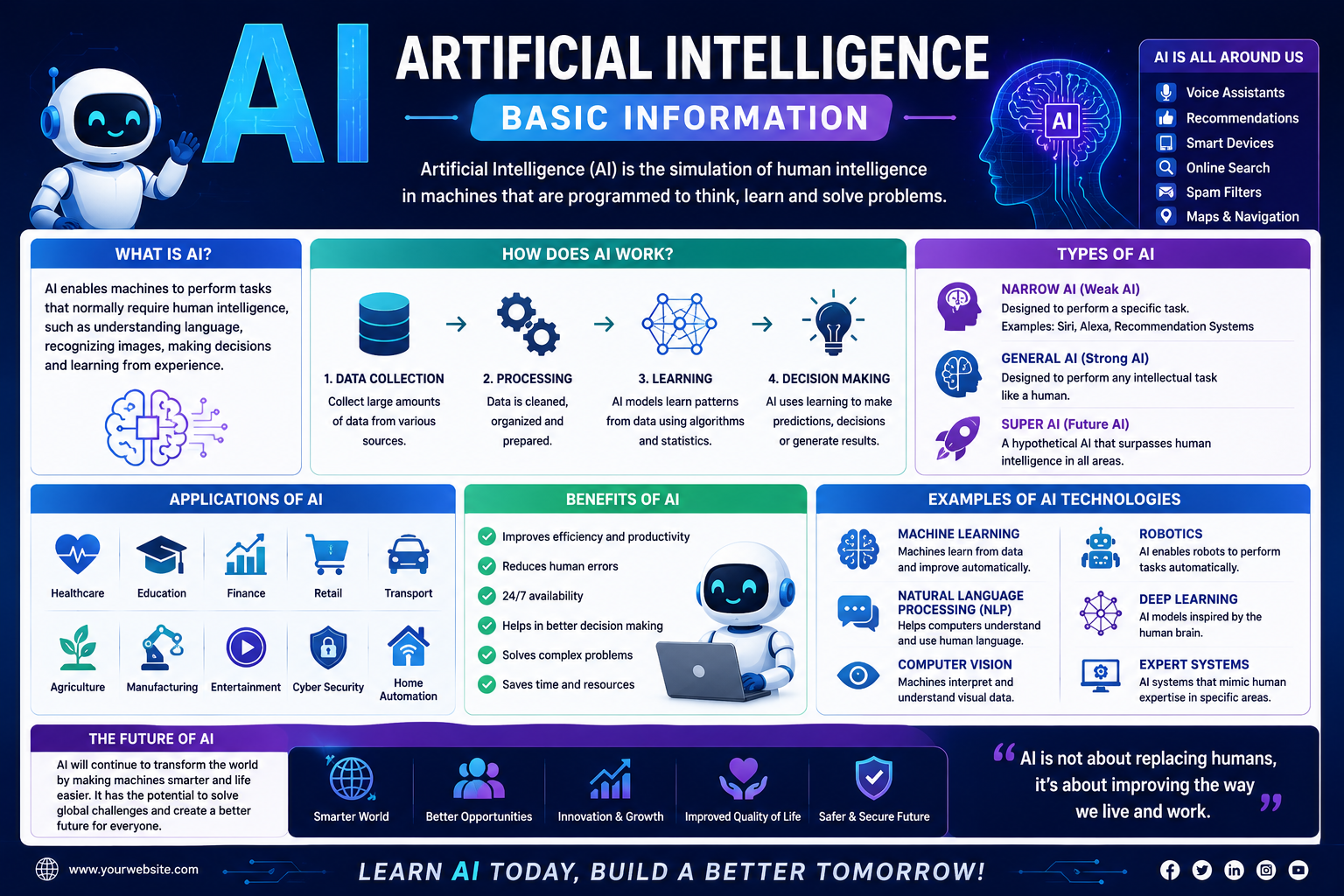
Artificial Intelligence refers to computer systems that can perform tasks requiring human intelligence. These tasks include:
Learning from data
Problem-solving
Decision-making
Pattern recognition
Language understanding
Predictive analysis
Automation
Modern AI technologies include:
Machine Learning (ML)
Deep Learning
Natural Language Processing (NLP)
Computer Vision
Generative AI
Reinforcement Learning
Predictive Analytics
These technologies are becoming integral to IT operations worldwide.
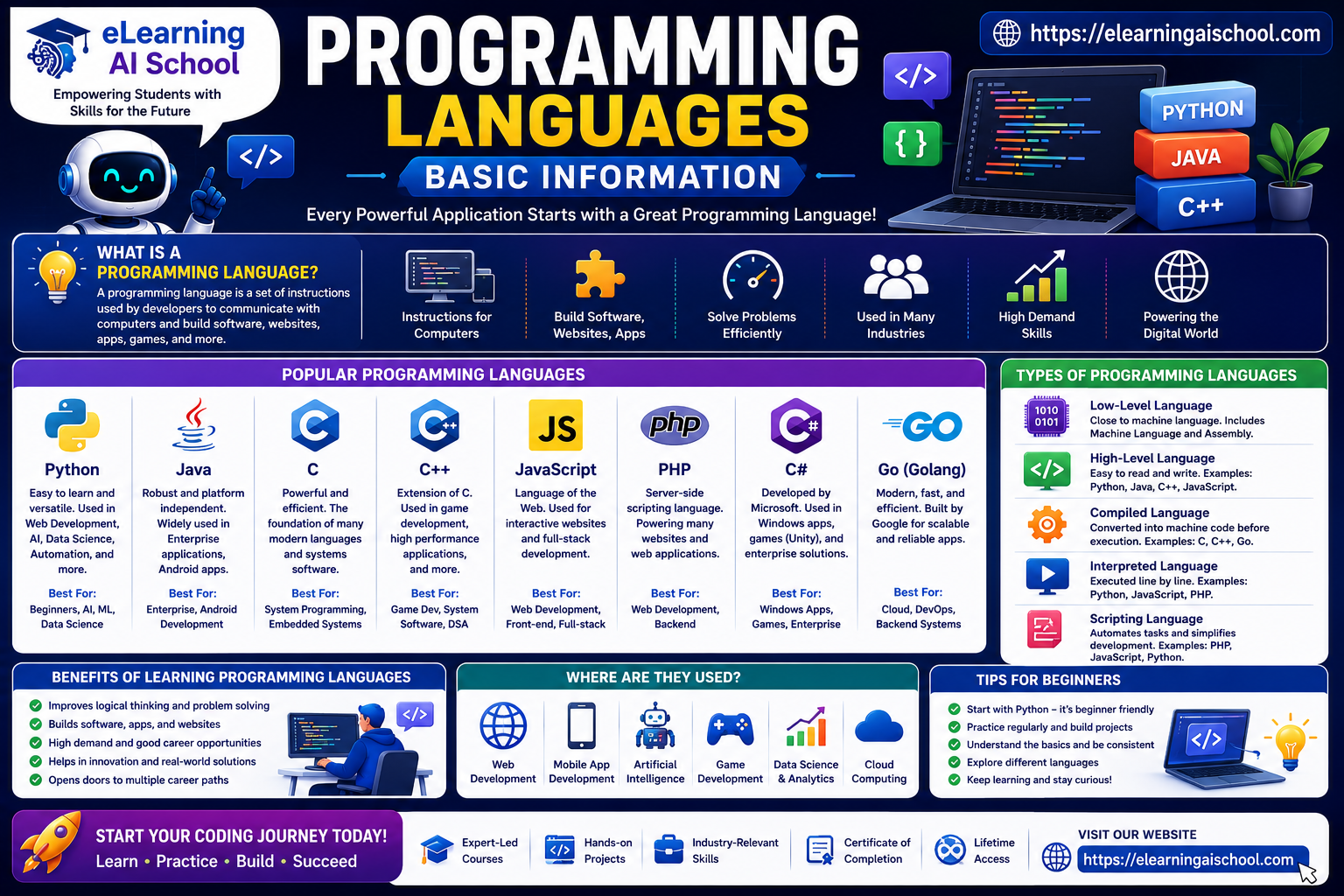
AI-Powered Software Development
Software development is one of the areas most affected by AI.
Automated Code Generation
AI coding assistants can generate code based on simple instructions.
Examples
GitHub Copilot
ChatGPT
Amazon CodeWhisperer
Microsoft Copilot
Benefits
Faster coding
Reduced development time
Improved productivity
Fewer syntax errors
Developers can focus on complex problem-solving while AI handles repetitive coding tasks.
Intelligent Debugging
Finding software bugs often consumes significant development time.
AI systems can:
Detect bugs automatically
Suggest fixes
Predict potential errors
Analyze code quality
This reduces software failures and improves reliability.
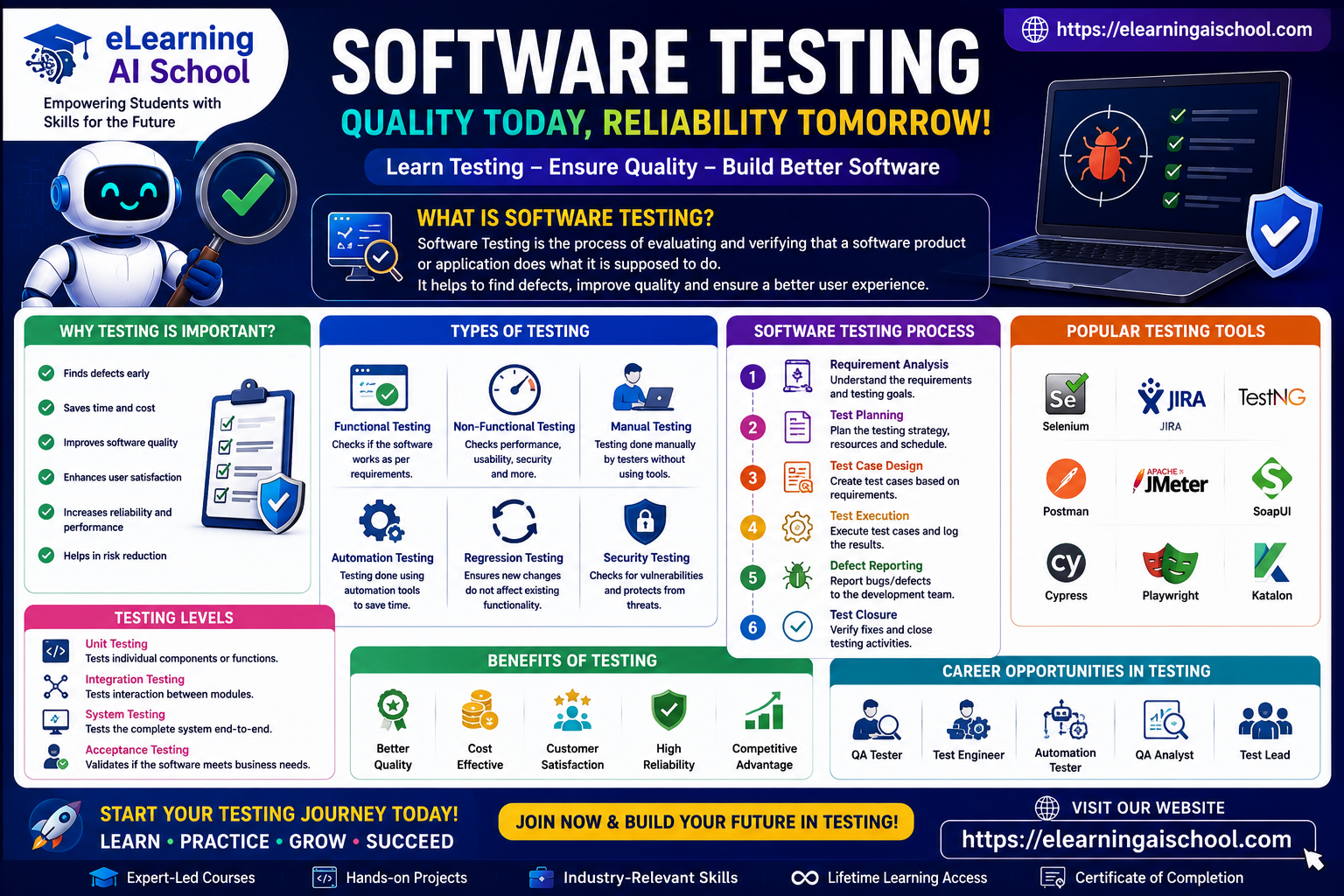
Automated Testing
Software testing ensures applications function correctly.
AI-driven testing tools can:
Generate test cases
Execute automated tests
Detect vulnerabilities
Monitor application performance
Benefits include:
Faster release cycles
Higher software quality
Reduced testing costs
AI in Cybersecurity
Cybersecurity is one of the most critical areas of modern IT.
With increasing cyber threats, AI provides advanced protection mechanisms.
Threat Detection
AI continuously monitors network activity.
It can identify:
Malware
Ransomware
Phishing attacks
Suspicious behavior
Unlike traditional systems, AI learns from new attack patterns.
Real-Time Security Monitoring
AI security systems operate 24/7.
They can:
Analyze billions of events
Detect anomalies instantly
Respond automatically
This significantly reduces response times.
Predictive Cybersecurity
AI can predict future attacks by analyzing historical data.
Benefits include:
Risk assessment
Threat forecasting
Preventive security measures
Organizations can stop attacks before they occur.
Automated Incident Response
When a security incident occurs, AI can:
Isolate infected systems
Block malicious users
Generate security reports
This minimizes damage and downtime.
AI in Cloud Computing
Cloud computing forms the backbone of modern IT infrastructure.
AI is making cloud systems smarter and more efficient.
Intelligent Resource Allocation
AI automatically manages:
Computing power
Storage resources
Network bandwidth
Benefits:
Improved performance
Lower operational costs
Better scalability
Cloud Optimization
AI helps organizations optimize cloud spending.
It can:
Identify unused resources
Reduce waste
Recommend cost-saving strategies
This improves return on investment.
Predictive Maintenance
Cloud platforms generate massive operational data.
AI analyzes this data to:
Predict hardware failures
Prevent outages
Schedule maintenance
Result:
Increased uptime
Enhanced reliability
AI in IT Infrastructure Management
Managing IT infrastructure is complex and resource-intensive.
AI simplifies operations through automation.
Infrastructure Monitoring
AI monitors:
Servers
Networks
Databases
Applications
It identifies issues before they affect users.
Self-Healing Systems
Future AI systems will automatically:
Detect faults
Diagnose problems
Apply corrective actions
This reduces manual intervention.
Capacity Planning
AI predicts future infrastructure needs.
Benefits:
Better resource management
Improved scalability
Reduced hardware costs
AI in Data Management
Data is one of the most valuable assets in modern organizations.
AI improves data management significantly.
Data Analysis
AI processes large datasets quickly.
Applications:
Business intelligence
Customer insights
Market forecasting
Organizations can make better decisions.
Data Cleaning
AI automatically:
Removes duplicates
Corrects errors
Standardizes data
This improves data quality.
Data Classification
AI organizes information automatically.
Benefits:
Easier retrieval
Improved compliance
Better security
AI in IT Helpdesk and Customer Support
Customer support is evolving rapidly with AI.
AI Chatbots
Modern chatbots provide:
Instant responses
24/7 support
Multi-language communication
Benefits:
Faster service
Reduced support costs
Improved customer satisfaction
Virtual IT Assistants
Employees can ask AI assistants questions about:
Software issues
Network problems
Password resets
This reduces helpdesk workloads.
Automated Ticket Management
AI automatically:
Categorizes tickets
Prioritizes issues
Routes requests
Support teams become more efficient.
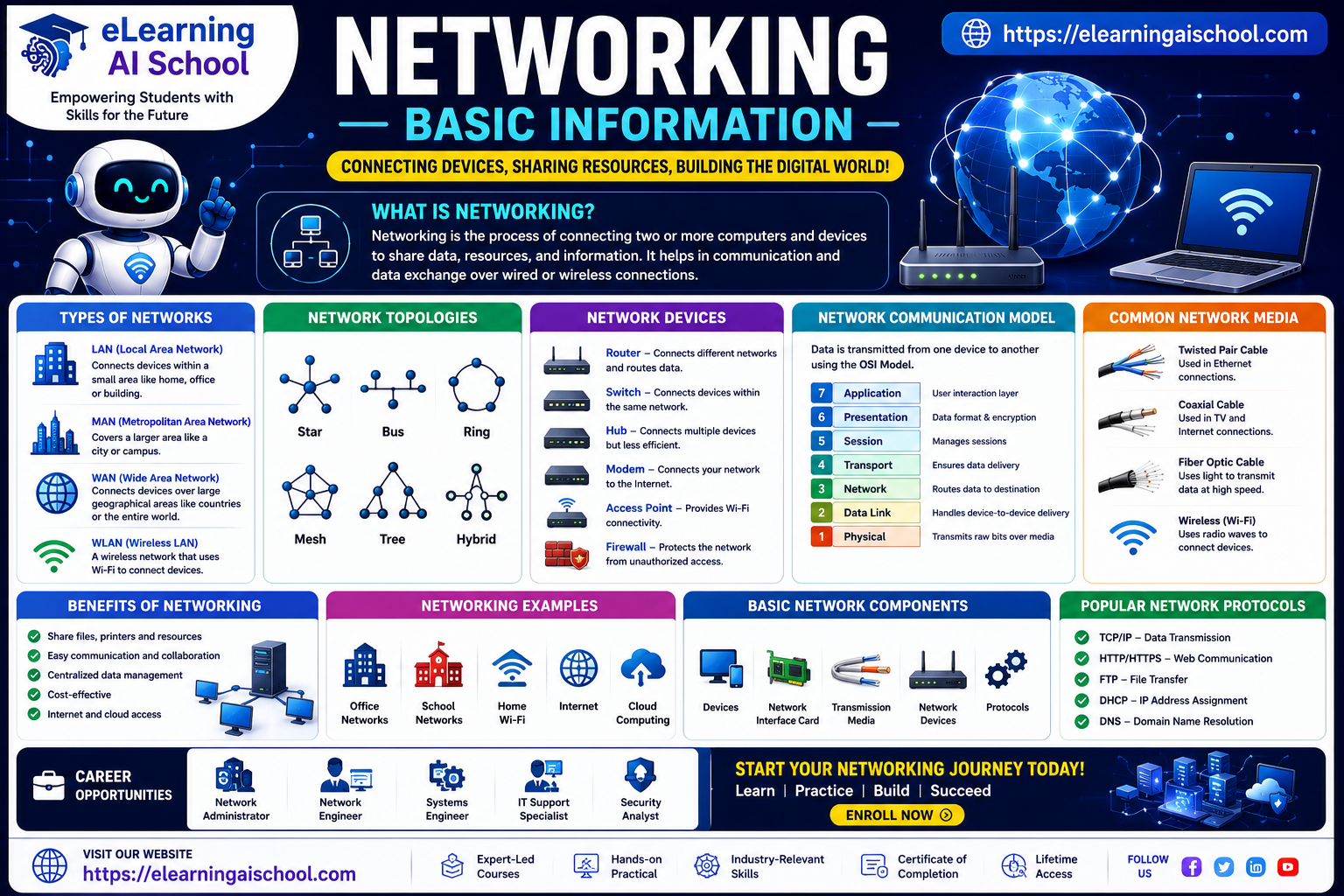
AI in Network Management
Networks are essential to IT operations.
AI improves network performance and reliability.
Traffic Analysis
AI analyzes network traffic patterns.
Benefits:
Improved performance
Reduced congestion
Better user experience
Network Security
AI identifies:
Unauthorized access
Suspicious traffic
Security threats
This strengthens protection.
Automated Network Optimization
AI dynamically adjusts network settings.
Result:
Faster communication
Improved efficiency
Reduced downtime
AI in DevOps
DevOps combines development and operations for faster software delivery.
AI enhances DevOps processes significantly.
Continuous Integration and Deployment
AI automates:
Code integration
Testing
Deployment
Benefits:
Faster releases
Reduced errors
Improved quality
Predictive Monitoring
AI predicts system failures before they occur.
This minimizes downtime and service disruptions.
Performance Optimization
AI continuously improves application performance.
Organizations achieve better reliability and scalability.
AI in Business Intelligence
Business Intelligence (BI) helps organizations make data-driven decisions.
AI enhances BI through advanced analytics.
Predictive Analytics
AI forecasts:
Sales trends
Customer behavior
Market opportunities
Organizations gain competitive advantages.
Automated Reporting
AI creates reports automatically.
Benefits:
Time savings
Improved accuracy
Faster decision-making
Real-Time Insights
Executives receive immediate business intelligence updates.
This enables rapid responses to changing conditions.
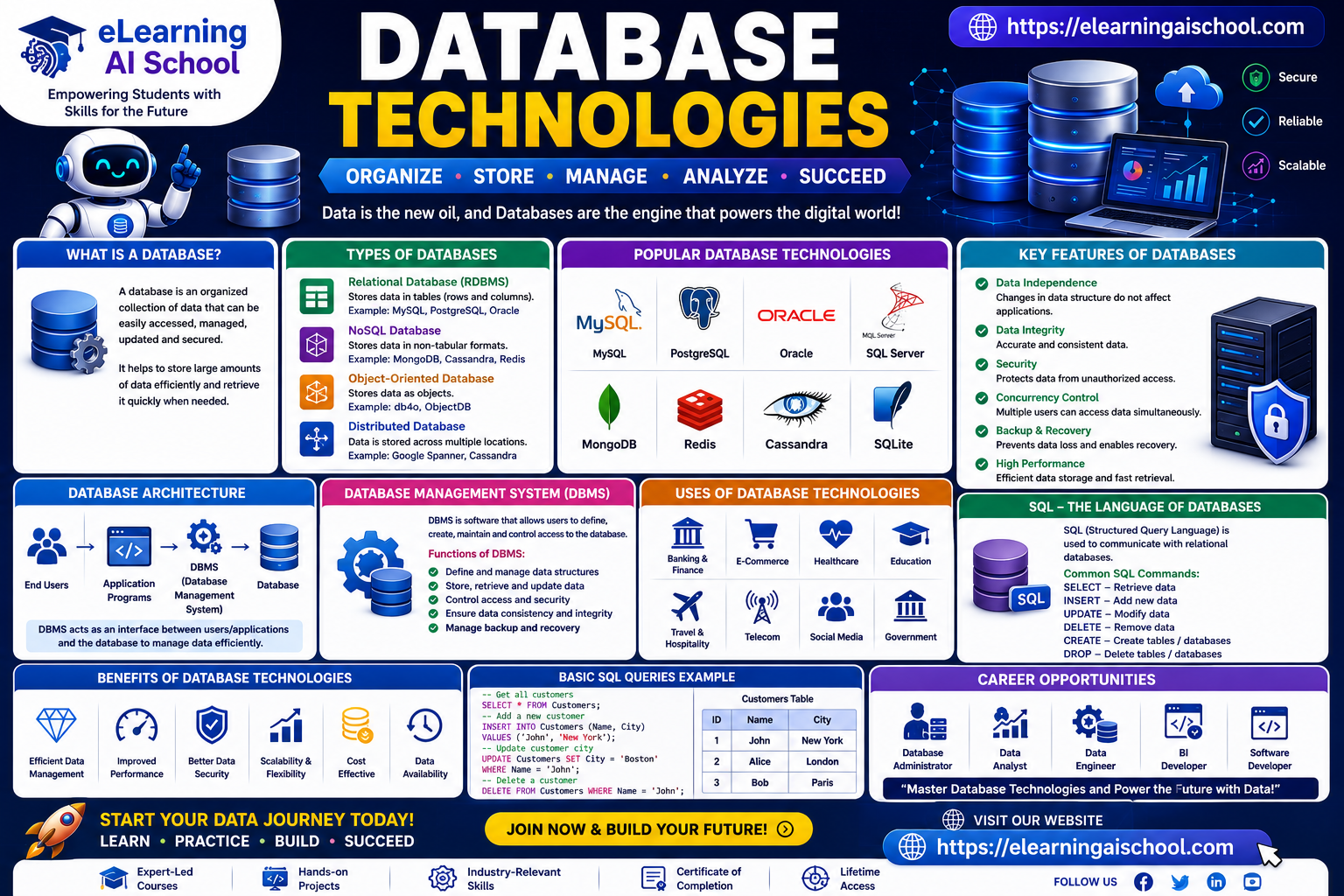
AI in Database Management
Modern databases require constant monitoring and optimization.
AI assists database administrators by:
Detecting performance issues
Optimizing queries
Predicting storage needs
Preventing data loss
Future databases will become largely autonomous.
AI and Automation in IT Operations (AIOps)
AIOps combines Artificial Intelligence with IT operations.
It uses machine learning to automate operational tasks.
Benefits of AIOps
Faster Problem Detection
AI identifies issues immediately.
Reduced Downtime
Automated responses resolve problems quickly.
Enhanced Productivity
IT teams focus on strategic initiatives.
Improved User Experience
Systems remain reliable and responsive.
AI in Software Project Management
Project management becomes more efficient through AI.
Resource Planning
AI helps managers allocate:
Personnel
Budgets
Equipment
More effectively.
Risk Prediction
AI identifies project risks early.
Examples:
Delays
Budget overruns
Resource shortages
Progress Tracking
AI monitors project status automatically.
Managers receive real-time updates.
AI in Quality Assurance
Quality Assurance (QA) ensures software reliability.
AI improves QA through:
Automated testing
Bug prediction
Performance monitoring
Error detection
Organizations deliver higher-quality products.
AI in Enterprise IT Systems
Large organizations rely on complex enterprise software.
AI improves:
ERP systems
CRM platforms
Supply chain management
Financial systems
Benefits include better efficiency and decision-making.
AI and Generative Technologies
Generative AI is one of the fastest-growing areas of IT.
Content Generation
AI creates:
Documentation
Reports
Emails
Technical guides
Code Generation
Developers receive AI-generated code suggestions.
This accelerates software development.
Knowledge Management
AI organizes organizational knowledge for easy access.
Employees find information quickly.
AI in IT Recruitment
Hiring skilled IT professionals is challenging.
AI assists by:
Screening resumes
Matching candidates
Scheduling interviews
Predicting job success
Recruitment becomes faster and more accurate.
AI in Digital Transformation
Organizations worldwide are pursuing digital transformation.
AI accelerates this process through:
Process automation
Data analysis
Customer engagement
Operational efficiency
Digital transformation initiatives become more successful.
Future AI Technologies in IT
Several emerging technologies will shape the future IT industry.
Autonomous IT Systems
Future systems will manage themselves with minimal human involvement.
Capabilities include:
Self-monitoring
Self-healing
Self-optimization
Quantum AI
Combining AI with quantum computing will solve highly complex problems.
Applications include:
Scientific research
Financial modeling
Cybersecurity
Hyperautomation
Hyperautomation integrates:
AI
Robotics
Process automation
Organizations achieve unprecedented efficiency.
Intelligent Digital Twins
Digital twins simulate real-world systems.
AI analyzes these models to improve performance and predict issues.
Advantages of AI in the IT Sector
Increased productivity
Faster software development
Improved cybersecurity
Reduced operational costs
Better customer support
Enhanced decision-making
Improved infrastructure management
Faster problem resolution
Greater scalability
Continuous innovation
Challenges of AI in IT
Despite its benefits, AI presents challenges.
Data Privacy
Organizations must protect sensitive information.
Security Risks
AI systems can become targets for cyberattacks.
Skill Gaps
Employees need AI-related training.
Ethical Concerns
Responsible AI development is essential.
Implementation Costs
AI adoption requires investment.
Will AI Replace IT Professionals?
A common concern is whether AI will replace IT jobs.
The answer is largely no.
AI will automate repetitive tasks but will create new opportunities in:
AI Engineering
Machine Learning
Data Science
Cybersecurity
Cloud Computing
AI Governance
AI Operations
IT professionals who learn AI skills will be highly valuable in the future job market.
Future IT Careers Powered by AI
By 2030 and beyond, demand will increase for:
AI Engineers
Machine Learning Engineers
Data Scientists
Cloud Architects
Cybersecurity Analysts
DevOps Engineers
Prompt Engineers
AI Product Managers
AI Researchers
Automation Specialists
These careers are expected to become some of the highest-paying jobs in the technology industry.
Conclusion
Artificial Intelligence is revolutionizing the IT sector in 2026 and beyond. From software development and cybersecurity to cloud computing, infrastructure management, data analytics, customer support, and enterprise operations, AI is transforming every aspect of information technology. Organizations that adopt AI effectively will benefit from improved efficiency, stronger security, lower costs, faster innovation, and better customer experiences.
Rather than replacing IT professionals, AI acts as a powerful assistant that enhances human capabilities and enables teams to accomplish more than ever before. As technologies such as Generative AI, Machine Learning, AIOps, Quantum Computing, and Hyperautomation continue to evolve, the future of the IT industry will become increasingly intelligent, automated, and data-driven.
AI is not merely a technology trend—it is the foundation of the next generation of IT innovation and digital transformation. Businesses and professionals who embrace AI today will be better prepared for the opportunities and challenges of tomorrow's technology-driven world.